As America celebrates 250 years, Twin City Staffing is highlighting the amazing role of Upper Midwest manufacturing in our region.
Manufacturing has long been the backbone of Minnesota’s economy. From the roar of water-powered flour mills along the Mississippi River to today’s high-tech medical device and precision manufacturing facilities, the industry has shaped the state’s communities, created generations of careers, and fueled innovation across the Upper Midwest.
Minnesota’s manufacturing story is one of resilience, ingenuity, and continuous adaptation. While the products have changed dramatically over the past 170 years, one thing has remained constant: talented people have always been at the heart of Minnesota manufacturing.
Built on Natural Resources
Minnesota officially became a state in 1858, but its manufacturing roots began even earlier. The region’s abundant natural resources—including vast pine forests, fertile farmland, powerful rivers, and rich iron ore deposits—provided the foundation for industrial growth.
One location proved especially important: St. Anthony Falls on the Mississippi River. As the only major natural waterfall on the Mississippi, the falls generated tremendous water power that attracted entrepreneurs eager to build mills and factories.
During the mid-1800s, sawmills dominated the riverfront, converting white pine harvested from northern Minnesota into lumber used to build homes, railroads, and growing cities throughout the Midwest. As settlement expanded westward, another opportunity emerged that would forever change Minnesota’s economy: flour milling.
Minneapolis Becomes the Flour Milling Capital of the World
By the late nineteenth century, wheat grown across Minnesota, the Dakotas, and the Canadian prairies flowed into Minneapolis by rail. Although the region’s hard spring wheat produced excellent flour, it was difficult to mill using traditional methods.
Minnesota entrepreneurs responded with innovation.
Mill owners such as Cadwallader Washburn and Charles Pillsbury invested in new technologies, including the middlings purifier and the gradual reduction roller-milling process, which dramatically improved both flour quality and production efficiency. These innovations allowed Minneapolis mills to process enormous quantities of wheat while producing consistent, high-quality flour.
By 1884, Minneapolis had become the largest flour milling center in the world, earning the title “Flour Milling Capital of the World.” Companies that began in the city’s milling district—including Washburn-Crosby, which later became General Mills, and Pillsbury—grew into internationally recognized brands.
The success of flour milling also created thousands of jobs beyond the mills themselves. Railroads, grain elevators, engineering firms, equipment manufacturers, packaging companies, banks, and shipping businesses all expanded to support Minnesota’s booming agricultural economy.
Iron Ore Helps Build America
While flour fed a growing nation, northern Minnesota helped build it.
Beginning in the 1880s, rich iron ore deposits were discovered on the Vermilion, Mesabi, and later Cuyuna Iron Ranges. These discoveries transformed northeastern Minnesota into one of the country’s most important mining regions.
Railroads transported Minnesota iron ore to ports in Duluth and Two Harbors, where it was loaded onto ships bound for steel mills throughout the Great Lakes region.
That steel became the framework for America’s rapid industrial expansion. It was used to build railroads, bridges, factories, skyscrapers, automobiles, farm equipment, and eventually ships and military equipment during both World Wars.
The growth of mining also stimulated demand for heavy machinery, machine shops, transportation equipment, and industrial manufacturing across the Upper Midwest, helping establish the region as one of the nation’s premier manufacturing centers.
Manufacturing Across the Upper Midwest
Minnesota’s success was part of a larger manufacturing story unfolding across the Upper Midwest.
Wisconsin developed world-class paper production, industrial machinery, and food manufacturing industries. Michigan became synonymous with automobile manufacturing. Illinois emerged as a leader in steel production, heavy equipment, food processing, and transportation manufacturing.
Together, these states formed one of the most productive industrial regions in North America.
An expanding railroad network connected farms, forests, mines, factories, and ports, allowing manufacturers to move raw materials and finished goods efficiently across the country. The Upper Midwest quickly earned a reputation for producing high-quality products supported by skilled workers and practical innovation.
A New Era of Manufacturing
By the middle of the twentieth century, Minnesota manufacturers were no longer relying solely on natural resources. Instead, they began producing increasingly sophisticated products requiring advanced engineering and specialized expertise.
Companies like 3M pioneered new materials and adhesives. Medtronic, founded in Minneapolis in 1949, became a global leader in medical technology. Manufacturers across the state expanded into precision machining, plastics, electronics, industrial equipment, aerospace components, food processing, agricultural equipment, and automation.
This transition reflected a broader trend in manufacturing: success increasingly depended on research, technology, quality control, and workforce skills rather than simply access to raw materials.
Manufacturing Today
Modern manufacturing bears little resemblance to the factories of a century ago.
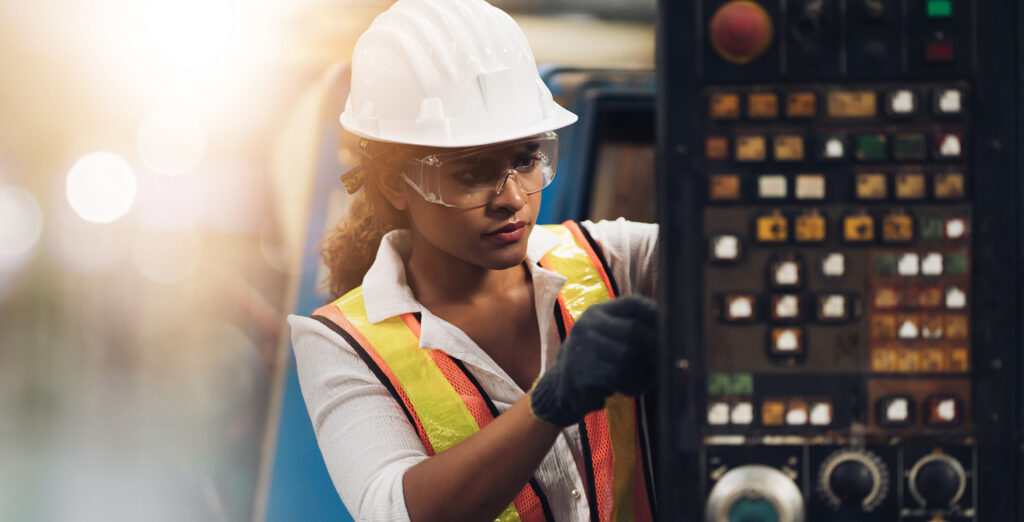
Today’s facilities often feature robotics, computer numerical control (CNC) machining, automated quality inspection systems, digital production planning, and sophisticated supply chain technologies. Many manufacturing careers now require technical training, problem-solving abilities, and expertise in operating advanced equipment.
At the same time, manufacturers continue to depend on skilled production workers, maintenance technicians, welders, machinists, assemblers, engineers, logistics professionals, and supervisors.
According to the Minnesota Department of Employment and Economic Development (DEED), manufacturing remains one of the state’s largest and most important industries, employing hundreds of thousands of Minnesotans and producing goods that are sold throughout the United States and around the world.
Looking Ahead
Minnesota manufacturing has never stood still.
Over the past century and a half, manufacturers have adapted to changing technologies, shifting markets, economic downturns, global competition, and evolving customer demands. That spirit of innovation continues today as companies invest in automation, artificial intelligence, advanced materials, sustainable manufacturing practices, and workforce development. Twin City Staffing is committed to partnering with Upper Midwest manufacturing companies identifying the right talent for the right jobs that will continue the amazing history of manufacturing growth in our region.
The future looks promising. Minnesota remains home to globally respected manufacturers, a highly skilled workforce, outstanding technical colleges and universities, and a culture that values craftsmanship, innovation, and continuous improvement.
As experienced workers retire and new technologies reshape production, manufacturers will continue looking for talented people who are ready to learn, grow, and build rewarding careers.
From the first water-powered mills along St. Anthony Falls to today’s advanced manufacturing facilities, Minnesota has spent more than 170 years proving that manufacturing is about far more than making products—it’s about building communities, creating opportunity, and driving innovation.
That legacy continues today, and the next chapter of Minnesota manufacturing promises to be just as exciting as the last.